
“The tree grew large, but she could not cut off its bark…in its midst Lilith had built for herself a house, the ever shouting maid, the rejoicer of all hearts, the pure Inanna how she weeps! - Gilgamesh and the Huluppu Tree
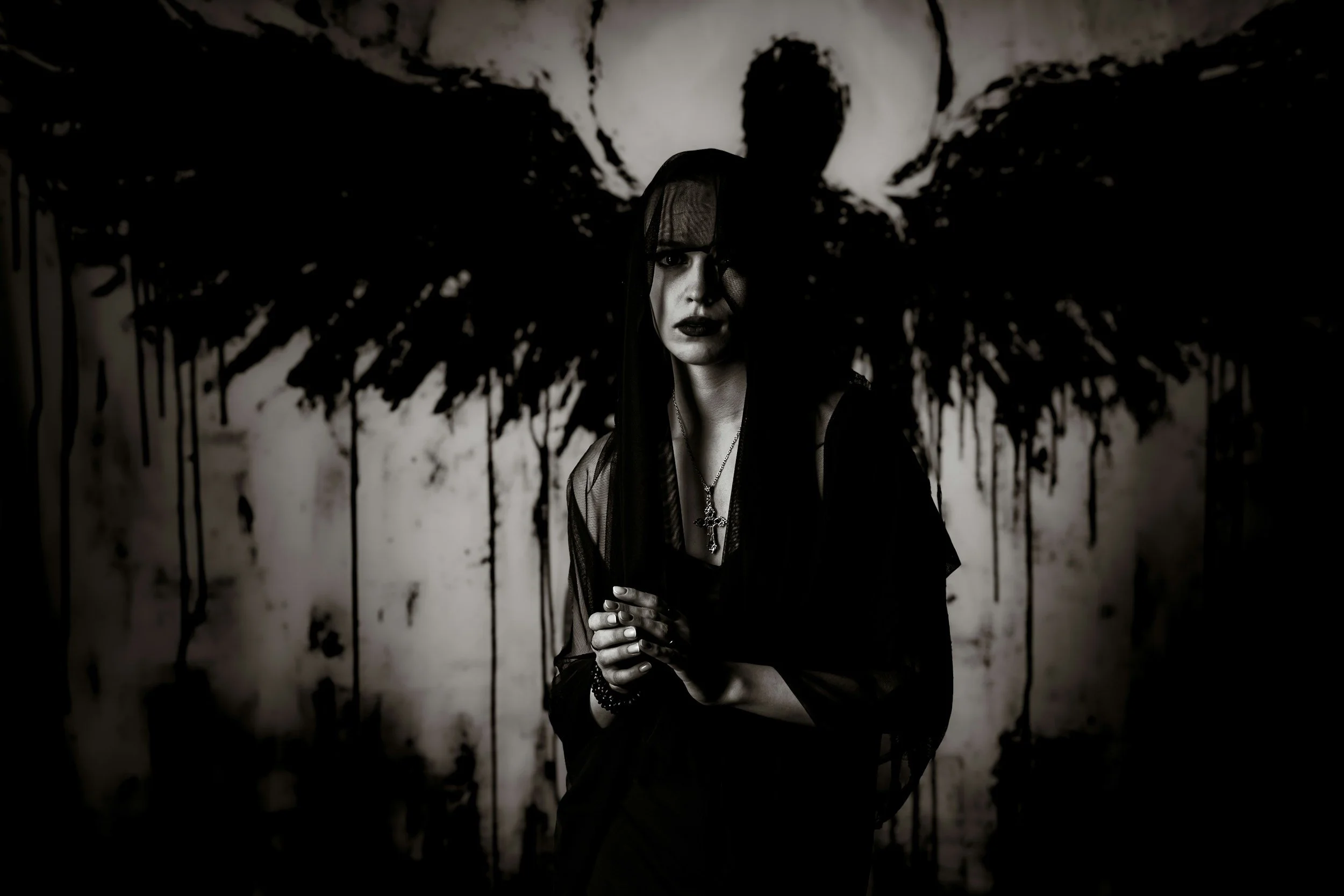
Lilith, the first woman to carry the moniker of a “wicked woman in literature.” A figure who evolved over the course of centuries, from a winged demon in both Babylonian mythology, where she was a screeching demon making home in a sacred tree in Sumerian text, and evolved into a popular serpent-female figure in the Renaissance era depictions, to an evil entity in biblical texts (Gaines, 2025).
Lilith is the first creation of humanity, yet was branded with the dark, fatale archetype of the femme identity; and she is the first of many femmes that bear the weight of society’s scorn due to the disdain towards the feminine body and persona. Depictions of women throughout the ages of literature followed a formula of one-dimensional feminine archetypes that only shaped women in the lens of suppression and submission. Yet, throughout the ages we have found ourselves illustrating the ways in which righteous rage uncages divine feminine nature.
Days ago, I came across a comment that said feminine rage is a sacred creation, holy in its existence. The practice of exploring femme characters in dark fiction affords readers and author alike to unveil the power society sought to distort. From the femme fatale archetype, to the housewife-gone-awry, and the predator in Prada, there are so many identities that reflect the feminine archetype in dark fiction stories. For this article, let’s look at some subgenres of dark fiction such as: gothic fiction, horror and dark romance—my personal favorites.
Gothic Fiction
Gothic fiction is an age-old genre that we all know and love. It’s a writing form that seeks to subvert the concept of unease to explore Enlightenment themes. Through the dark themes we explore nature and balance, the true core of humanity. However, what of the strength in the femme identity? Femmes have faced centuries of accosting through violence, shame, and its roots from a covetousness accumulated from envy and contempt. The era of gothic fiction explored femme villainy through contributing it to two archetypes, the victim or the afflicted.
The “victim” archetype was depicted as the meek, innocent, naive woman who couldn’t make it without “[being] saved by the male protector and taken to their homes as wives and mothers because they are accepted as weak, fragile, sensitive, and ‘victimized’” (Üstün, 2022, pg. 504). Largely in this era, the manners of women were defined based on the patriarchal design and followed the construct of submissive women. Feminine meekness was the ideal 18th century woman, who balanced her damsel stature while also intriguingly demonstrating intelligence and whimsy.
An example of this is the character Justine in Frankenstein. Justine is a character that was cut from the movie, but in the book she is a victim of Frankenstein’s monster and is framed for a crime she did not commit. Justine was a close friend of the Frankenstein family, yet was framed for the death of William Frankenstein, Victor’s younger brother, and is hanged for the crime. Analysis of her character defines her as personification of goodness, and is a “martyr because she is sacrificing her life for absolution of her soul,” being utilized as a tool to demonstrate the loss of such in the beginning of Victor Frankenstein’s life (Kasmerl, n.d). Even in dehumanization of feminine characters, the subversion of societal norms appeared throughout narratives. In the lens of literature, we can explore how to reclaim the autonomy stripped from us.
Albeit deconstructive in its attempts, the other archetype present in gothic literature, the afflicted, proposes an interesting segue into the dark women we know and love today. Novels were more than just wild creations of the imagination but rather the “novels about violent women articulated a broad range of social problems that could, and did, lead to murder…that included discriminatory divorce legislation, men’s physical abuse to their wives, and women’s legal and economical subservience” (Morris, 1990, pg. 2). Femme characters afflicted with melancholy, lunacy, or malevolence where the characters you see in the role of a villain in Gothic literature. The era’s various depictions of criminal, murderous women in Victorian, Gothic literature reflected realistic experiences of women.
While it must be acknowledged that in the early stages of its development minimally carried characters that reflected queer and Black or BIPOC bodies, gothic literature is a vast genre that had set the stage for future writers to create their place in the genre. From legendary titles such as The Picture of Dorian Gray by Oscar Wilde, Carmilla by Sheridan La Fanu, The Black Vampyre: A Legend of St. Domingo by Uriah Derick D’Arcy we gained for other legendary stories such as Beloved by Toni Morrison, Linden Hills by Gloria Naylor, Joplin’s Ghost by Tanarive Due, House of Hunger by Alexis Henderson and more!
Dark Romance
Dark romance is the genre that many readers and the Library of Angels team knows intimately at this point. It's an outlet for the misfortuned and home for souls that run against the grain of society. Fiction grapples with themes that mirror the human experience and subvert the status quo, so of course it sets the stage for readers and authors to confront the femme experience. In previous articles we’ve discussed the ways in which dark romance explores themes of devotion through taboo natures, but we’ve only touched on male protagonists who played the anti-hero or villain roles. What about the girls?
In dark romance, largely women are the figures of devotion–and while I’m not complaining, the concept of a femme villains or anti-heroes gets me hyped! Receiving love despite the cruelties and darkness, not only serves for a bomb ass plot, but it combats gender misconceptions. For centuries, society wrote to the world that women who went against the mold of the “meek, submissive” archetype were then to be ostracized. So you can imagine that dark romance not only challenges the construct of social norms, but forces the reader to redefine their understanding of gender norms…through the dirty dealings of a badass woman.
As explored before, the genre examines the theory of erotic uncanny, a theory rooting from Freudian theory that describes the blending of sexual attraction with the psychological phenomenon of recognizing something unsettling. When examining how femme villains come to play, we must recognize how the dubious nature serves a larger purpose.
The complex, flawed aspects of the character demonstrate the aspect of humanity that has been ostracized from society, and in the practice of seeing these characters receive love, we too can understand that the oddities of our nature are worthy of love. And in utilizing femme characters in the roles of morally grey main characters serves to assert the truth that women who go against conformity also deserve love.
Despite the crazy shit these characters pull, the readers find empathy for these femme villains because their plights mirror that of us as a whole. Seeing characters reflect aspects of reality can illustrate how, whether it be times someone underestimated you based on gender, discriminated against you because of your identity, or sought to exploit you–you’re not alone in this treacherous plight. A genre that affords the partaker to understand the existence of trauma and scars, does not mean we are unworthy of love. The particular emergence of femme characters delving into the realm of darkness and gaining their desires does two following things for the reader: assert the power in feminine persons and deconstruct the idea that such power diminishes attractiveness in femme identities.
Horror
Horror in its entirety is a psychoanalysis of the human experience, and the subtle femme representation in the genre turns misconceptions of the femme experience onto the fans watching.
What’s the thing about horror that gets the people going? The blood? The terror? Strategic marketing that plans the need to read or watch a specific story until the burning desire is satiated?
From the subtle commentary of female exploitation and mutilation in Jennifer’s Body to the splatterpunk-esque approach to the recent horror movie Pearl, the femme predator is making waves in modern media and sets the stage for the unsettling feeling that sometimes, women are just evil for the fun of it. And that’s okay, all women deserve hobbies sometimes.
Horror’s play on the unknown affords readers and authors to assert the unspoken nature of the femme body and identity. Horror speculates on the human experience through an unsettling lens in an almost shock therapy method. The depictions of gore and gruesome dwellings serve as an extreme conduit to examine capitalism, classism, race, sexuality, and more. Subgenres like erotic horror, pink horror, body horror and more are examples of realms in which femme characters are being explored in a new lens. They’re flying out the horror gate swinging her blades, accruing admirers in their wake.
Traveling back to the subgenre of body horror, let’s examine how the genre explores the existence of others through embracing the presence of fear. Body horror is more than the stomach churning gore, but it serves a larger literary purpose. An analysis done on the theory of abjection which describes this theory and expands on how “sadistic underpinnings of horror outweigh the masochistic ones, and the otheredness of the feminine body is often assumed in horror…otheredness plagues its female subjects as she is stripped of agency before being cast off” (Stopenski, 2022, pg. 3). Depictions of the female body are largely dissected in the literature and serve as metaphors of monstrous imagery. When examining the realms of body horror, “the nonhuman body registers physical to the audience, something that they do not recognize as holding personhood…[the narrative] forces the viewer to insert themselves into the narrative of the grotesque and expressed that once corpsehood is attained, it is not only ego death–it is the birth of inhumanity. Individuality is purged…achieving the ultimate abjection” (Stophenski, 2022, pg. 5). The feminine body is utilized to depict the finite capability of personhood by building on the fears of experiencing social othering that femme bodies experience. Grotesque, gruesome depictions in horror strip viewers and readers of their inhibitions and forces them to confront the fear of erasure. Hence why viewers and readers additionally can root for the female villain. Despite the evil deeds that the villain committed, seeing the villain prevail against expectations and achieve agency within the macabre, then the gore feels worth it.
Particularly, this is why we see marginalized communities utilize fiction to assert their identities in society through horror themes. The genre is inherently subversive to human nature’s taboos and beautifully affords the oppressed freedom of expression. From the exploration of queerness in the allegories to the yearning for acceptance through hauntings or hyper, to the critiques of postcolonial effects on the Black and BIPOC, or the allegories to the female experience within society. When examining the novel My Soul to Keep by Tanarive Due the central message of Black women’s sexuality is explored through a vampiric narrative. From the narrative of the Black woman desiring the vampire, Due “rewrite[s] the historical realities of Black female bodies by creating characters that find and exert agency over their bodies” (Brooks, 2011). Rewriting marginalized communities, particularly Black women, asserts control over the agency we seek and already yield. Narratives such as this serve to illustrate realities in which the audience can understand they too are deserved of being the main characters. Even within the unsettling, grueling conditions seeing marginalized women prevail is the best representation a girl can have.
In examining the representation of femme characters in horror, it is essential to highlight the inherently queer presence in various horror narratives. Similar to the mode of writing seen within Black narratives, the presence of queer femmes in horror disrupts the status quo prescribed to femmes. An article exploring the tones of queerness in horror discusses the show Ratched to highlight the identity of queer femmes in horror as “some dimensionality ot a classically evil character and has the potential to disrupt the historic queer coding of lesbians as perverse and uncanny” (Westengard, pg. 131). Horror affords readers and authors to turn society’s scorn on its nose and express their right to agency through coded literary devices and narratives. Even in the figure of the monster or the shadow of a crazed villain, there is representation for an overshadowed community akin to Ratched, stories like A Dowry of Blood by S.T. Gibson, The Gilda Stories by Jewelle Gomez, and others, horror carries an undeniable tie to queerness.
In the context of the femme experience in dark fiction, we see two variations of the femme experiences in horror, the allegory to femme traumas and the exploration of righteous vengeance. Alternating within archetypes, the femme character embodies various ages of time and experiences of women. Gothic literature set the stage for literary themes of nature, balance, darkness, rebellion and the macabre yet also upheld gender conformities. Dark romance highlights the deserving of love while horror explores critical commentary on the human experience. The femme character is no monolith, but damn doesn’t she give you a thrill when she’s doing wrong.
References:
Brooks, K. (2011). Finding the Humanity in Horror: Black Women’s Sexual Identity in Fighting the Supernatural. Poroi, 7(2), 1–14. https://doi.org/10.13008/2151-2957.1098
Gaines, J. H. (2025, July 3). Lilith - Biblical Archaeology Society. Biblical Archaeology Society. https://www.biblicalarchaeology.org/daily/people-cultures-in-the-bible/people-in-the-bible/lilith/
Kasmerl, L. (n.d.). Revision-Justine Moritz Introduction | Professor Kasmer’s Ivanhoe Games. Retrieved November 17, 2025, from https://wordpress.clarku.edu/kasmerivanhoe/rolejournal/revision-justine-moritz-introduction/
Morris, V.B (1990). Double Jeopardy: Women Who Kill in Victorian Fiction (1st ed.) [PDF]. The University Press of Kentucky. https://web.archive.org/web/20200709115406id_/https://uknowledge.uky.edu/cgi/viewcontent.cgi?referer=&httpsredir=1&article=1041&context=upk_english_language_and_literature_british_isles
Stopenski, C. (2022). Exploring Mutilation: Women, Affect, and the Body Horror Genre. (Un)Common Horrors, 2(12), 1–19. https://hrcak.srce.hr/file/404631
Üstün Kaya, S. (2022). Women in gothic fiction: Depiction of female figures in horror stories. RumeliDE Dil ve Edebiyat Araştırmaları Dergisi, (Ö11), 501-512. DOI: 10.29000/rumelide.1146701.
Westengard, L. (2022). Queer Horror. The Cambridge Companion to American Horror.