
The Girls and The Gays: Female Presence in Queer Media
It’s safe to say that the world has been in the market for more representation in mainstream media. In current times, the internet erupted in public outcry from the emergence of the trending Canadian television show Heated Rivalry, a book-to-screen adaptation of the bestselling Game Changers series by Rachel Reid. The internet was flooded with a range of reaction videos, fans exercising their free marketing, their emotion-wrecking compilation edits, and public outcry from every crevice of the globe–that streams the show. An emotional devotion for this show spurred an agelong conversation that many have cut their teeth on, but we as a collective have yet to reach the conclusion.
In this shifting atmosphere, we all can hear the echoes of the prevailing question that plagues our hearts–specifically in the words from the dear cast of Hamilton written by Lin-Manuel Miranda, “who tells your story?”
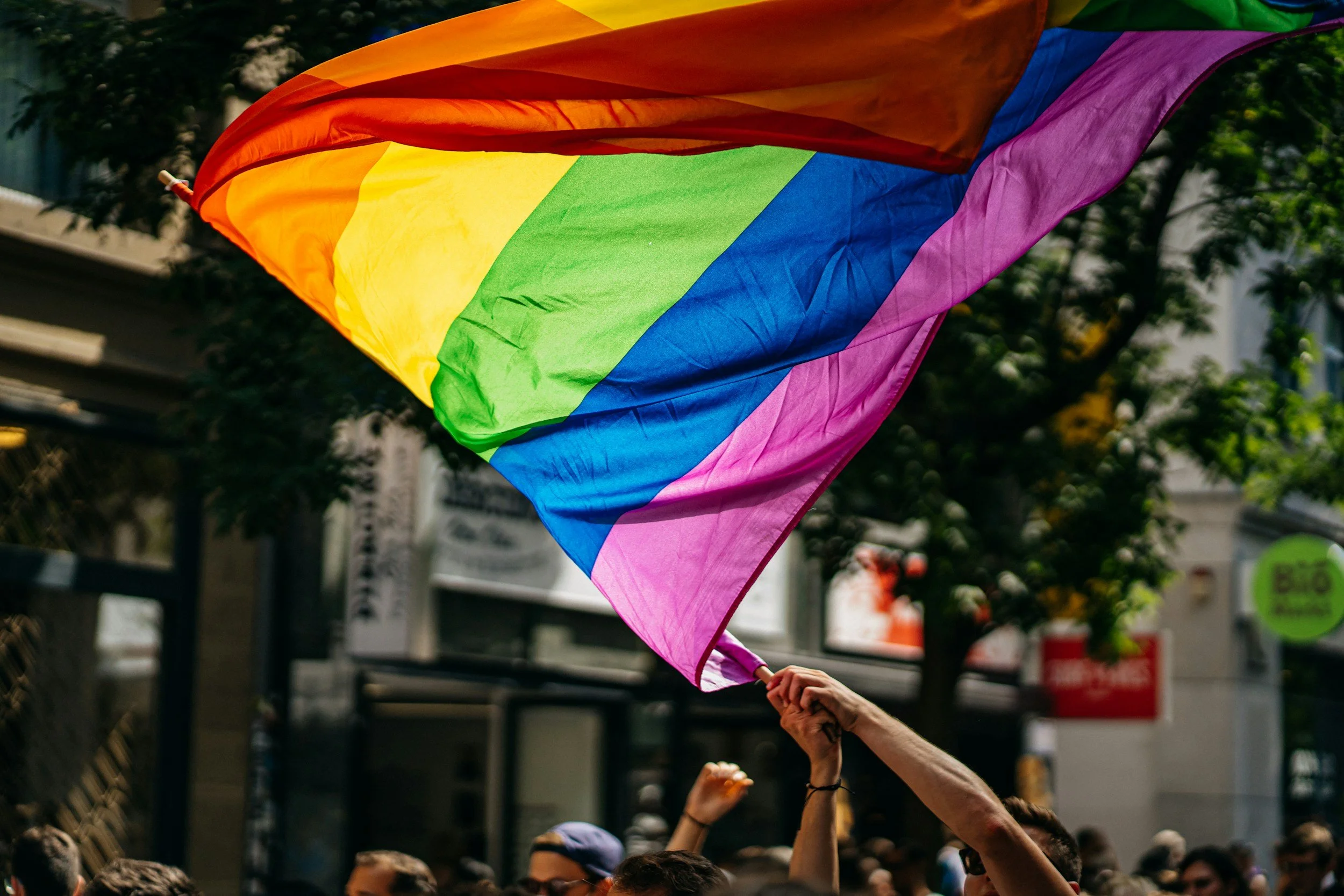
For many, the question is as clear as freshly Windex’ed glass, but we continue to hit this road of conversation. Queerness in art is nothing new, but the demand for characters outside the realm of villains, token features, or trauma-grappling characters is now the louder voice amongst the crowd. The fact that in every era of art and television, we see voices pathologizing the radical role of representation, but we have yet to minimize larger issues of versatile representation. Such worries illustrate that the question of what defines “true” representation has never truly been answered, but merely silenced under the waves of entertainment trends.
In the beginning, much of queer characters were coded with stereotypes and misconceptions of the community. Writer Koeun Kim examines the history of queer-coding in their article, “Queer-Coded Villains (and Why You Should Care)” and the harm it poses for both queer and non-queer demographics. Queer-coding characters in popular media was popularly contributed to the homosexual ban in the early days of film and entertainment. Kim discusses how “talking about sexual deviance and perversion was considered taboo, and as homosexuality was considered both, it was never stated outright” (Kim, 2017, pg. 157). Therefore, media and society assumed queer identities “differ from such familiar social misfits as alcoholics and morphine addicts in their deviation was not necessarily a ganglion of actions…but see as the result of their fundamental nature…their abnormality might therefore be identified by any number of behavioral traits and outward manifestations,” making them easily translated in villainous lenses. (Kim, 2017, pg. 157). Such ideologies presented significantly within media that then shaped the societal response toward queer communities; while obscured in all contexts, the unavoidable truth is that an important impact of said media representation is these images shaped preconceived notions in those unfamiliar with the topics. For many contrary to the ways we combat it, media and press are two essential forms of information for humans as they learn of social experiences outside their realms of social interactions. Moreover, this media phenomenon resulted in the beginning stages of misrepresentation of queer characters. Rooted from stereotypes of social deviants and flawed natured people that sadly, for decades the queer identity was garbled in society’s eyes–until members of the community asserted their voices to combat such misconceptions.
To deconstruct the impressions of this era of media, the queer community took significant strides in deteriorating the misconceptions of identity and sex within modern media through asserting their voices in various art forms for mainstream consumption. Research on the gay identity in literature explores theories of Cohler and Hammack that “potential master narratives for gay identity, depending in part on the cultural situation in which one comes out of age: the narrative of struggle and success and the narrative of emancipation" (McLean & Westrate, 2010, pg, 227). The impact of community members sharing their narratives reverberated through the ages and contradicted the ideological framework of deviance haunting the queer community. The conceptual framework of the gay identity veered from the practice of caricatures and ventured into combating conformity to mainstream identity politics.
An infamous set of examples of this is pioneering media outlets during the Stonewall Era ranging from the Gay Liberation Front, Drag Magazine, Mattachine Review, and many other forms of queer press. Previous member of the Gay Liberation Front Karla Jay said that “the Gay Liberation Front changed the whole narrative of what had been the homophile movement. Instead of asking for tolerance and acceptance we demanded equality and celebration” as they worked on various publications illustrating the queer identity in its true hues (New York Public Library, 2019). While with every movement there’s backlash, the production of revolutionary media representation set the stage for the queer community to carve their seat at the table.
In regards to the translation of queer identity in literature, pioneers like activist and scholar Audre Lorde utilized her writing to reflect on the ecological framework that explores lesbianism; in the 1982 work, Zami: A New Spelling of My Name, it was said that Lorde explores how “the erotic…is inseparable from the political as it is a power-lending force and facilitates repossession of their exploited bodies,” and the novel focuses on “Zami lesbians as asserting their selfhood and navigating a unique lesbian identity by transcending the constraints of structural inequalities” (Sheoran, 2024, pg. 317). The novel tells the coming of age story of a young Black lesbian woman navigating society while combating racism, familial drama, and more. Lorde’s socio-cultural framework reflects her intention to demonstrate the lesbian identity outside the scope of White heteropatriarchal systems, and serves to establish its place in literary history. At the instigation of a Black lesbian scholar and activist, the framework of lesbianism in literature took the misconstrued eroticism and transformed it into the tool for socio-political liberation.
I know, I know–what the hell does this have to do with dark romance and bookish space? Well, because this exact issue is our community.
Well, great question. I’m more than sure you’ve come across modern examples of queer stories–particularly in the Dark romance genre trending in the Bookish space. In recent years, notable female authors have emerged on the top sales charts for MM, or effectively known as Achillean stories, ranging from but not limited to Chokehold by Leigh Rivers and Harleigh Beck, God of Fury and Kiss the Villain by Rina Kent, The Necessary Evils Series by Onley James, and more. Additionally, we see various books featuring bisexual men within polyamorous couplings popularly indicated by the following abbreviations: MMF, MFMM, MMMFM, and more. Now, whether we’ve enjoyed them, never read them, or they’re on your TBR collecting dust, these are few of many titles we’ve seen the hype or possible…ire.
Now, this is not in any way an attack towards or at these authors. I bet these authors are lovely people and wrote from the heart, but rather we need to recognize the roles in which femmes play within the spaces they occupy.
Many marginalized communities have taken to the stage about how the strides for liberation don't end with the characters in the books or on the stage, but with community work to achieve true building–however to truly achieve this we have to understand the weight of it all. So we must ask ourselves: When readers are picking up these stories that feature queer male characters, what is the motive behind the reading? Can these same readers confidently say they platform and share own voice stories and/or books? The duty of allyship doesn’t stop at sitting at the tables where the conversation starts, but rather to usher in the members of the community many invariably profit off of.
Turning back to my darling introductory topic, Heated Rivalry, in a recent interview about the show’s rising popularity, the interview set the stage for this said conversation. Actors Connor Storrie and Hudson Williams were asked about possible motivations that draw female viewers towards Achillean romances, particularly the Game Changer series. When asked their thoughts on why female fans love the show, Hudson poses the following thought:
“[The] element of possibly of women who have a desire to give up control [enjoying it]” because there’s “a lot of fear there…a fear of violence because men are big and scary, but if they can live vicariously through the Shane character, they know there’s an inherent safety. I think that’s possible…I’m a little bit theorizing” (Cuby, 2025).
Co-star and friend Connor Storrie spoke of a conversation with their costume designer where she spoke how the show focuses on a “prolonged foreplay and yearning, which differs from the more pornographic ideas of sex,” and “pull towards vulnerability and connection” (Cuby, 2025). Further in the interview Storrie quotes an unnamed Booktok personality saying the following:
“she was like, “The reason why women are so into stories that involve gay men is because they are so exhausted by the idea of straight men that this is the only way that they get to see a form of masculinity that feels accessible and interesting to them.” I think that’s such a cool point, because it does turn the normal idea of masculinity on its head in a lot of different ways” (Cuby, 2025).
The idea of Achillean romances being an “accessible” way to consume male characters in literature and media, stuck out to me from this interview. To think that Achillean romance affords female readers the opportunity to be free of the recycled archetypes like the hard hearted bad boy, or the denigrated woman who is only in the story to take the brunt of misogyny. For many, Achillean romance wasn’t just a genre, but a way to combat constructed ideas of toxic masculinity found in otherwise–seemingly–heterosexual literature. Yet, in the same vein, it can be argued that the responsibility of escapism is not a cross for another community to bear–particularly a marginalized community.
This has been a longstanding controversy argued by scholars, critics, and fellow readers of the genre. For many critics, much of the MM or Achillean romance written by straight women falls under a brand of narrative writing that mirrors fanfiction. An analysis of the genre connects the genre to slash fiction, which is “a genre of writing that emerged in the 1970s when some female fans took two well-known male characters…and rescripted them imaginatively in homoerotic scenarios” (Foster, 2015, pg. 510). Rather than being contributed to literature written with altruistic intentions, the slash fiction written by female writers is contributed to fetish writing. Journalist and out lesbian Victoria Brownworth explicitly stated such in her 2010 critique of the genre stating, “if you aren’t familiar with MM fiction here’s what it is: straight women fetishizing the lives of gay men” (Brownworth, 2010). Brownworth’s argument against the subgenre asserts the acceptance of MM romance from female writers serves as a gateway to objectification of the homosexual narrative, rather than the perceived intent of acceptance and tolerance. In conjunction with the issue of fetishization interloping in queer literature, there’s other arguments regarding how there’s a deeper draw for women towards MM fiction.
Author of the article, “What to Do If Your Inner Tomboy is a Homo: Straight Women, Bisexuality, and Pleasure in M/M Gay Romance Fictions” Guy Mark Foster explores the female attraction to Achillean romance in an intriguing way. Foster engages with a text that analyzes slash fiction and the literary models of human mating where it is argued “slash is not really about male homosexuality at all…[but] are in essence female fantasies about overcoming obstacles to achieve perfect mateship” (Foster, 2015, pg. 516). Interesting, right? The notion of utilizing homosexual narratives to construct an optimal expression of romance is one that definitely detours the conversation into precarious lanes.
Said notions spurs further analysis of how the genre, “[offers] up male protagonists who, on the one hand do not have to overcome their resistance to homosexuality to fall in love..and on the other hand male protagonists who do have to overcome such resistance, ” and inevitably, “the central reason why the male lovers in much slash fiction are heterosexual is because heterosexuality…represents a significant conflict for the lovers to surmount if they are to have a lasting relationship” (Foster, 2015, pg. 516). So what does this mean for consumers? The exploration of love and sex through characters outside one's experience, is the inevitable draw to fiction, yet there’s a complex issue in such application.
Issues of “escapism” from queer literature and media without responsible consumption leads to the very fears of critics to begin metastasizing in the work. During these episodes of reality suspension, there are nuances of the gay male experience that could fall mute when authors utilize these characters as literary tools to explore emotional exchange. Some take on this practice where these very real people are no longer seen as true people but rather imaginary creatures like demogorgons or unicorns furthering the discrimination against said community. So…is it insane for the queer community to fear that the popularity of these stories aren’t coming from the best of places?
While we chew on this, let me throw another realm of thought at you to ease the process–the deconstruction of the patriarchy in the realm of ambiguity.
Outside the use of M/M romance to explore romance outside of the realms of toxic masculinity for the female’s gaze, the engagement with homosexual romance engages with nontoxic expressions of masculine affection. Foster’s article presents scholarly discourse that speaks on “male/female” “mateship” are "inadequate because they rely in part on an outmoded, if heteropatriarchal, structure of identification and desires that requires a fixed and stable gendered” as M/M romance possibly “the conventional gendered dynamics of mainstream heterosexual romances offer limited identificatory pleasures…and therefore [M/M romance] affords these readers greeted mobility” (Foster, 2015, pg. 517-518). While readers and authors can endear to the humanly flawed experience of the characters, the exclusivity of the queer male allows for more room to allow for narrative growing pains in love to occur. The realm of thought suggests that with M/M romance, females are afforded greater fluidity in pleasure and affections through presenting the stories in unconventional gendered dynamics.
Okay, I know I’m talking all this shit about the presence of girls in the queer sphere, but it’s just the tip of the iceberg when it comes to the million dollar question–who lives to tell your story? Literature for many affords freedom to explore aspects of the human emotion, but at some point when does one’s enjoyment blur the lines for another’s reality?
With many marginalized identities, there’s that lurking fear that our realities become characters for entertainment, inevitably erasing the work of predecessors to divorce themselves from reality momentarily; and this is without even addressing the issue in queer media where other identities that the community experiences daily–erasure. Sapphic literature disproportionately is highlighted in the reader space, rooted from factors of misogynoir and fetishization. Despite the use of their sexuality for the facilitation of a sexual plot, bisexuality is disregarded, mischaracterized or misconstrued. Then trans characters–whether it be due to ignorance or misconceptions of the identity–are largely avoided outside of own-voice authors.
I say this not as a tit-for-tat because quite frankly, each topic is a fish to fry. However it must be acknowledged that the queer community deserves a seat at the table of media popularity–not to be mere figures of psycho-sexual and emotional release through their narratives.
Does this mean that people outside the community cannot enjoy the movies, shows, books and more that center the queer community? Of course not! Art is a radical form of rebellion against a heteropatriarchal and supremacist system that seeks to suppress specifically queer, BIPOC, disabled bodies. –which is why there are so many pushes for diverse reading. So while art is for the people, the people need to understand their role in being in these spacesThis very thing is the reason that Own voices have a platform and continue to be uplifted within the community. For many, dipping their toes is a feat that can spark a shift in societal discourse, but before we can reach that crescendo, we have to pick up the tools to build.
The conversation of heterosexual presenting women writing Achillean romances has been explored from various lenses ranging from gay men to women who sought to understand the culture surrounding it, and one that even I myself grapples with. As a consumer of Achillean romances written by both female and male authors, the hope is to serve in feeding into the cycle of uplifting stories that represent diverse experiences and must learn from the advice of the community I hope to support. For many of the community, if the work that is being platformed that reflects on the real world experiences of their people do not then result in the uplifting of their seat at the table, then yeah, it can become a toxic cycle of exploitation under the guise of liberation.
Queer fiction is diverse in its exploration of the human experience, particularly the way in which we see a new emerging culture outside of social conformities and suppression. Then adding the aspect of intersectional disparities from race, class, and respectability politics adds more complexity to the conversation of responsible media consumption. In the scope of suppression and White supremacy, the strive of liberation gave birth to the presentations of the divine masculinity and feminine identity that we have barely scratched the surface in discovering.
References:
Brownworth, V. (2010). The fetishizing of queer sexuality: A response. Retrieved from https://lambdaliteraryreview.org/2010/08/the-fetishizing-of-queer-sexuality-a-response/
Cuby, M. (2025, December 12). For ‘Heated Rivalry’ stars Connor Storrie and Hudson Williams, selling sex comes with strings attached. Them. https://www.them.us/story/heated-rivalry-stars-hudson-williams-connor-storie-interview
Foster, G. M. (2015). What to do if your inner tomboy is a Homo: straight women, bisexuality, and pleasure in M/M gay romance fictions. Journal of Bisexuality, 15(4), 509–531. https://doi.org/10.1080/15299716.2015.1092910
Kim, K. (2017). Queer-coded villains (and why you should care). Dialogues@ Ru, 12(1), 156-166.
Sheoran, M. (2025). Audre Lorde and Queer Ecology: An Ecological Praxis of Black Lesbian Identity in Zami. Journal of Lesbian Studies, 29(3), 314–332. https://doi.org/10.1080/10894160.2024.2362115
The New York Public Library. (2019). A History of Queer Press (A. Flax-Clark, Interviewer). Retrieved December 16, 2025, from https://www.nypl.org/blog/2019/06/01/history-queer-press
Westrate, N. M., & McLean, C. (2009). The Rise and Fall of Gay: A Cultural-Historical Approach to Gay Identity Development. Psychology Press, 18(2), 225–240. https://www.researchgate.net/profile/Kate-Mclean-2/publication/38114767_The_Rise_and_Fall_of_Gay_A_Cultural-Historical_Approach_to_Gay_Identity_Development/links/5785f99b08aec5c2e4e2be10/The-Rise-and-Fall-of-Gay-A-Cultural-Historical-Approach-to-Gay-Identity-Development.pdf
Age is more than a number, but a mark of one’s experiences in this vast thing we call life. A stark contrast to the path of idealistic day dreams, the promising older love interest ensures security is possible while you can also explore the layers of spontaneity that comes with youth. Read Nina’s take on why age gap romances are so popular when reading romance novels!